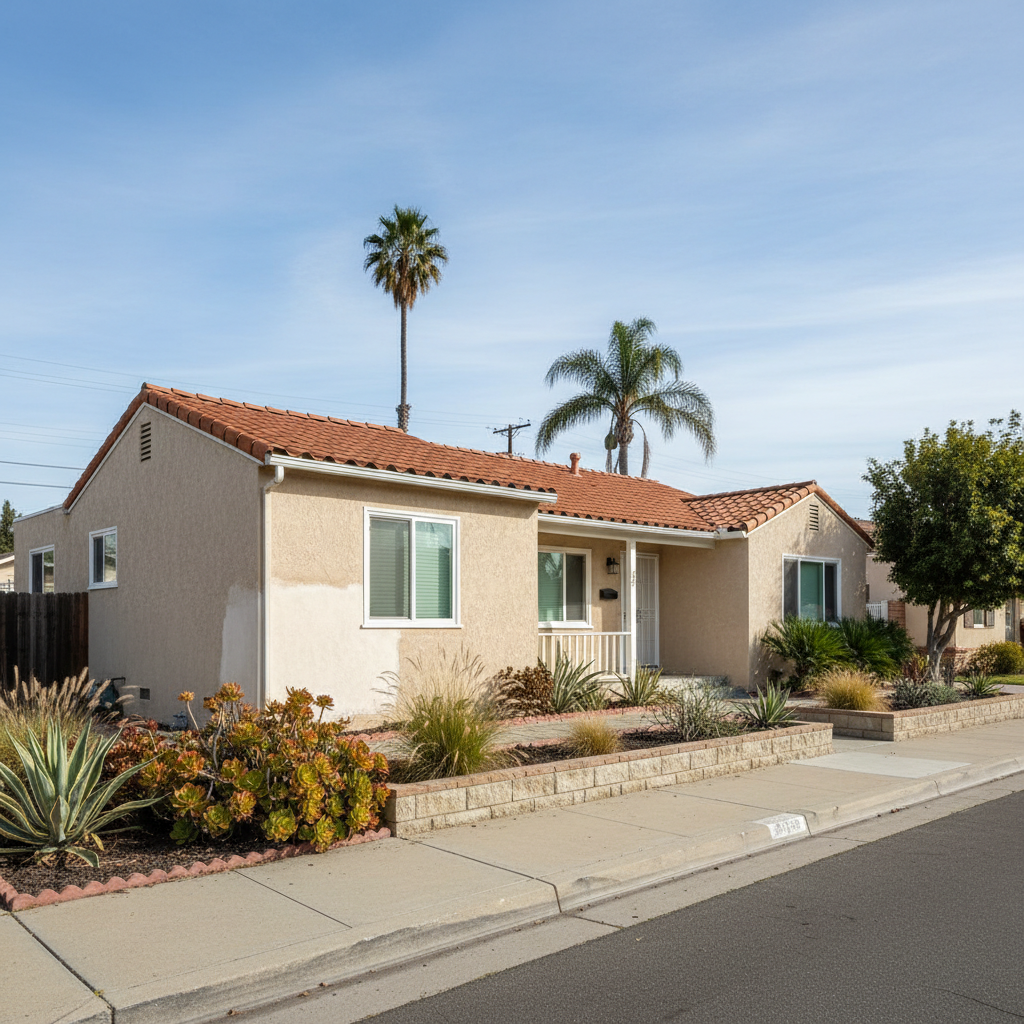
So, your home has stucco, right? And let's be honest, it's probably looking a little rough in a spot or two. Maybe it's just a tiny crack, or perhaps a bigger chunk is missing, or maybe there's some discoloration that just won't scrub away. Whatever the issue, ignoring it here in Pomona is a really bad idea. I've been doing stucco work for years, and what I've learned is that our local conditions make a huge difference in how stucco holds up, and exactly how it needs to be fixed.
Pomona's Stucco: A Few Unique Headaches
Our weather here in Pomona? It's a huge player. We get those scorching hot, dry summers, and then, out of nowhere, some seriously heavy downpours. This constant swing between extreme temperatures makes stucco expand and contract, which, as you can imagine, creates stress. And stress? That's what leads to cracks. It's not just the heat, either. Those dry winds, like our famous Santa Anas, can dry out new stucco way too fast if it's not handled perfectly, leaving it weak and crumbly. Then, when the rain finally does come, even the tiniest crack becomes an open invitation for water. That moisture can just sit there, slowly rotting the wood underneath, turning what could have been a small fix into a massive, expensive problem later on.
Beyond the weather, our homes themselves throw their own curveballs. We've got everything from the beautiful historic homes near Ganesha Park to the newer developments out in Phillips Ranch. Each era and style, whether you're talking about a Spanish Revival with its thick walls or a sleek mid-century modern, comes with its own stucco characteristics and, naturally, its own potential weak spots. For instance, those older homes often feature traditional three-coat stucco, while newer builds might use synthetic (EIFS) or one-coat systems. See what I mean?
Common Stucco Problems We See All the Time Here
So, what kind of stucco problems do we run into most often in Pomona? It's a real mix, but nearly every single one can be traced back to those unique local conditions:
- Cracks: These are definitely the most common. Whether they're those fine spiderweb cracks from thermal expansion or bigger structural cracks caused by foundation settling (especially with our expansive clay soils in some areas), you absolutely have to deal with them. Cracks are basically an open door for water.
- Water Damage: This usually shows up as discoloration, efflorescence (you know, those white powdery stains), or soft spots. Water sneaks in through cracks, or around windows and doors if the flashing isn't installed correctly, or sometimes even from sprinkler systems hitting the wall too hard.
- Impact Damage: Kids playing, a ladder that slipped, or even wind-blown debris during a storm can chip or dent stucco. These aren't just about looks; they leave the underlying layers exposed to the elements.
- Delamination: This is when the stucco starts to pull away from the wall underneath. It might look like bubbling or peeling. Usually, it's a sign of moisture trapped behind the stucco or just a poor original application.
We don't just patch things up, though; we really dig in to find the root cause. For hairline cracks, we use flexible compounds that move right along with your house. For bigger issues, we cut back to solid material, fix the lath if it needs it, and then build it back up with the right coats, making sure each layer cures perfectly. That's how you get a lasting repair.
Why Local Stucco Expertise Is Non-Negotiable
You might think stucco is stucco, no big deal, but that's just not true, especially when it comes to repairs. A contractor from outside our area might simply not understand:
- Our Climate's Impact: They might not grasp how our specific hot/cold cycles, dry air, and occasional heavy rains truly affect stucco, or how to pick the right materials and application methods to withstand it all.
- Local Building Codes: These can really vary, and you definitely want someone who knows exactly what's required right here in Pomona.
- Architectural Styles: Matching textures and colors on a historic home in Lincoln Park is a completely different ballgame than on a newer build. We've seen every finish imaginable, from smooth to dash to Santa Barbara, and we know how to blend a repair so well it's practically invisible.
- Soil Conditions: The expansive clay soils we have can cause foundation movement, which directly impacts stucco. A local expert understands this and knows what signs to look for.
Here at Alpha Stucco Pomona, we're not just licensed and insured; we're your actual neighbors. We know the homes, the weather, and the specific issues that pop up here. We always start with a thorough inspection, not just a quick glance, to really figure out what's going on. Our main goal? To make sure your repair doesn't just look good, but that it lasts, protecting your home for many years to come. Because when it comes to your home's exterior, you don't want guesswork; you want someone who knows Pomona stucco inside and out.